Oleg Penkovsky: The GRU Colonel the CIA Almost Turned Away
The Week the Photographs Made Sense
In October 1962, analysts at the National Photographic Interpretation Center in Washington were looking at U-2 imagery of western Cuba and seeing shapes in a field. Trapezoidal clearings. Vehicle tracks. Long canvas-covered objects arranged in a pattern.
They knew what those shapes meant because they had the manuals.
Soviet medium-range ballistic missile site layouts, deployment specifications, and technical characteristics had reached Western intelligence over the preceding eighteen months from a colonel in Soviet military intelligence. That material let analysts move from “something is being built” to “these are SS-4 launchers and here is their range.” The difference between those two statements shaped every decision Kennedy made over the following two weeks.
On 22 October 1962, the day Kennedy went on television to tell the American public about the missiles, the KGB arrested the man who had supplied the manuals.
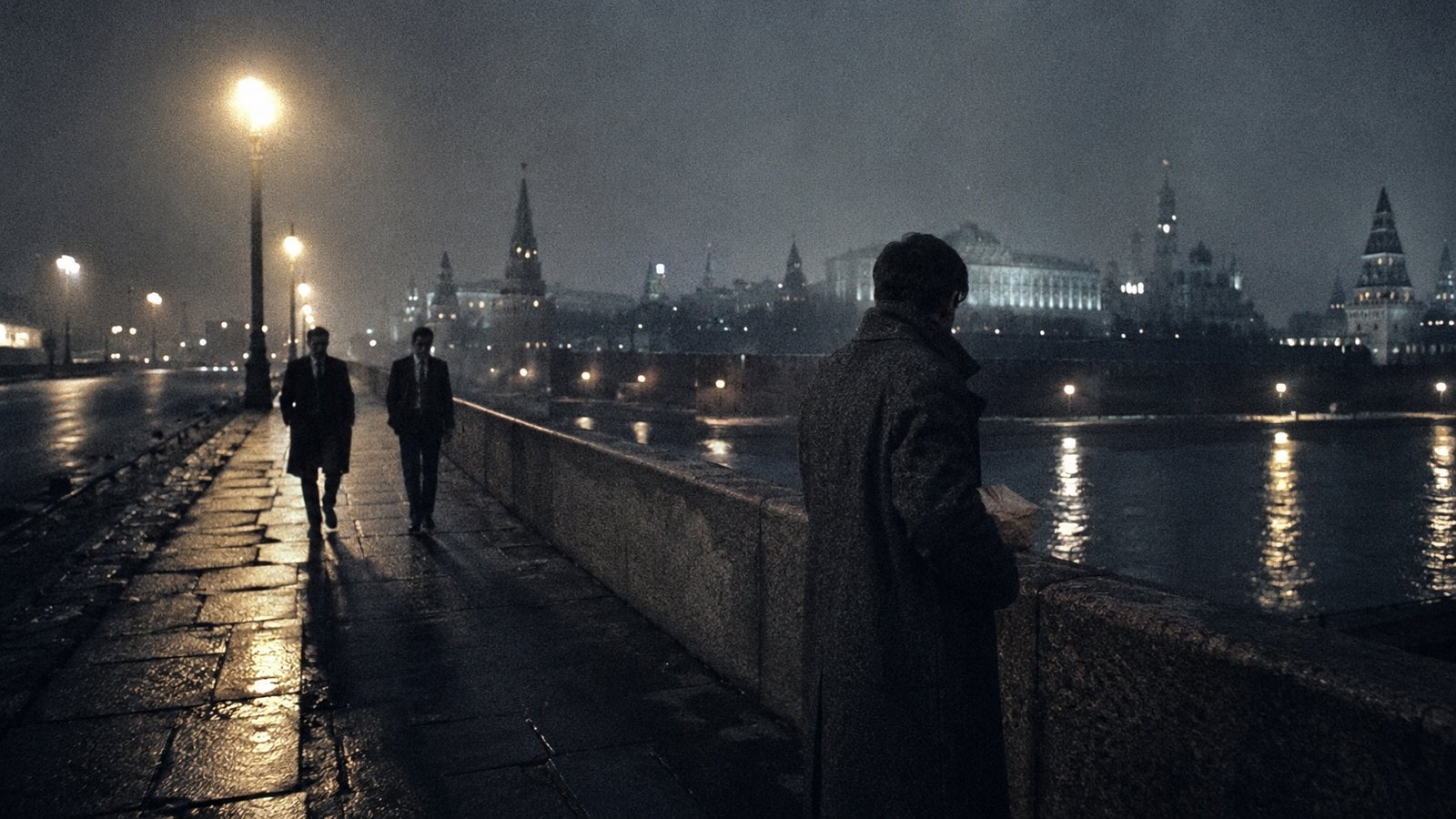
His name was Oleg Penkovsky. To understand how a decorated Soviet officer ended up in a cell at Lubyanka during the most dangerous fortnight of the Cold War, start two years earlier, on a bridge in Moscow, with a man nobody wanted to talk to.
Who Was Oleg Penkovsky?
Born: 23 April 1919, Vladikavkaz, North Ossetia
Died: 16 May 1963, Soviet Union
Service: Soviet Army, then GRU (Soviet military intelligence)
Rank: Colonel
Cover position: Deputy chief, foreign section, State Committee for the Coordination of Scientific Research
CIA codename: HERO (other codenames appear across different accounts)
Ran for: CIA and MI6 jointly, 1961 to 1962
Key intermediary: Greville Wynne, British industrial salesman
Fate: Convicted of treason, executed May 1963
One distinction matters before anything else. Penkovsky was not a Western officer infiltrated into Moscow. He was a Soviet insider with genuine access who volunteered his services to the other side, repeatedly, until someone took him seriously.
That distinction is the whole story.
The Officer With a Stain on His File
Penkovsky’s father served as an officer in the anti-Bolshevik White Army and died in the Russian Civil War when his son was an infant. In the Soviet system, that fact sat in a file and waited.
For a long time it did not surface. Penkovsky graduated from the Kiev Artillery Academy as a lieutenant in 1939, fought in the Winter War against Finland, served through the Second World War, was wounded, and came out a lieutenant colonel. He attended the Frunze Military Academy. He attended the Military Diplomatic Academy from 1949 to 1953 and moved into military intelligence.
He also acquired a patron, which in the Soviet officer corps was worth more than a record. Chief Marshal of Artillery Sergei Varentsov took an interest in him. That relationship opened doors, and it would later close on Varentsov like a trap.
In 1955 Penkovsky was posted to Ankara as a military attaché. The assignment did not go smoothly. He clashed with his rezident and the tour ended without distinction.
Then came India. Penkovsky was selected for the military attaché post, and this time the KGB pulled the file. The White Army father surfaced. The posting was cancelled, an investigation followed, and by November 1960 Penkovsky was parked at the State Committee for Science and Technology, a scientific liaison role with a nominal foreign-travel component.
He was forty-one. He had commanded artillery in wartime, trained at two elite academies, and been quietly informed that his ceiling had arrived, for reasons that had nothing to do with his own conduct.
Why Penkovsky Turned: A MICE Assessment
The recruitment framework that intelligence services teach breaks agent motivation into four categories: money, ideology, coercion, ego. It is a diagnostic shorthand, not a diagnosis. Real human sources are usually mixed cases, and Penkovsky is a mixed case with one very loud component.
Ego and recognition
This is the dominant factor, and the one most popular accounts underweight.
Penkovsky did not simply want to pass documents. He wanted standing. In his letters and early meetings he asked for Western military rank, for recognition of his contribution, for a future in which he was a decorated figure rather than an anonymous source. He requested and received the opportunity to be photographed in American and British officer uniforms during his London meetings. Handlers accommodated this because it cost nothing and it kept him productive.
Read that detail carefully. A man risking execution asked to try on the enemy’s uniform for a photograph. That is not tradecraft. That is a need.
Career frustration
The India cancellation is the hinge. A Soviet officer who has done everything right and is then blocked by his dead father’s politics has a specific grievance: the system is arbitrary and it has singled him out personally. Resentment of that kind tends to generalize into contempt for the whole apparatus.
Ideology
Genuine, but arguably downstream of the frustration rather than upstream of it. Penkovsky expressed real hostility toward Khrushchev’s leadership and real fear about Soviet nuclear adventurism. Whether that conviction preceded his career injury or grew out of it cannot be established from the record.
Money
Present but secondary. He was paid, and payments accumulated in Western accounts he was unlikely to ever spend. Money was not the lever.
The honest summary: an aggrieved, ambitious, genuinely alarmed man who wanted to matter, and who found a way to matter that also settled a score.
The Walk-In Nobody Wanted
In the summer of 1960, Penkovsky started hunting for an American.
He watched the U.S. Embassy in Moscow. He looked for an official he could approach without the encounter being observed and without the approach being deniable. Weeks passed. He grew impatient.
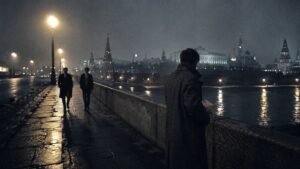
On a July evening he saw two young American students walking across the Bolshoy Moskvoretsky Bridge, heading back toward their hotel. Their names were Eldon Ray Cox and Henry Lee Cobb. Penkovsky approached them, made conversation, and handed over a package. He asked them to deliver it to an intelligence officer at the American embassy.
Inside was an offer to spy for the United States, along with a line that has followed the case ever since. He asked to be considered a soldier of the West, and wrote that the ranks of their armed forces had increased by one man.
The package reached the CIA. Nothing happened.
The refusal
The Moscow station’s reasoning was not stupid, and it was not cowardice in the ordinary sense.
Moscow in 1960 was the hardest operating environment in the world. American officers assumed continuous surveillance and behaved accordingly. A senior GRU colonel who materializes on a bridge and hands secrets to tourists fits the profile of a KGB provocation almost perfectly: too senior, too eager, too convenient. Engaging a provocation meant a burned officer, a diplomatic incident, and a career ended.
There was a second problem. The U.S. Embassy in Moscow, still bruised by the U-2 shootdown that May and the collapse of the Paris summit, declined to cooperate with any operational approach that risked another public confrontation with the Soviets.
So the CIA did something revealing. It handed the problem to the British.
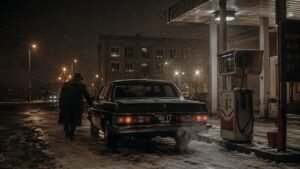
This is the pattern that connects Penkovsky to the other great volunteer case of the Cold War. Seventeen years later, a Soviet avionics engineer named Adolf Tolkachev would approach a car with American diplomatic plates at a Moscow gas station and be waved off five separate times before the CIA engaged. In the Tolkachev case the fear was that he was a dangle. In Penkovsky’s, the fear was of an incident. Different anxieties, identical outcome: the West’s most valuable source of the era sat unclaimed while the institution talked itself out of him.
How MI6 Picked Up What the CIA Dropped
British intelligence had an asset the Americans did not: a plausible civilian who traveled behind the Iron Curtain for legitimate reasons.
Greville Wynne sold industrial equipment to Eastern Bloc trade delegations. His business gave him a reason to be in Moscow, a reason to meet Soviet officials, and a reason to host them in London. MI6 used him as the contact channel.
Penkovsky met his handlers face to face for the first time in April 1961, in a London hotel room, with two American and two British officers present. He talked for hours. Over the life of the operation the debriefings ran to roughly one hundred and forty hours of recorded material.
The mechanics
Back in Moscow the tradecraft got thin and dangerous.
Penkovsky photographed documents with a Minox subminiature camera, often at his own desk or at home. Exposed film went out in a lead canister, a mundane-looking object now held in the International Spy Museum’s collection, chosen partly because lead survives handling and partly because it looks like nothing.
Delivery ran through Janet Chisholm, wife of MI6 officer Rauri Chisholm at the British embassy. She took her three young children to a park off Tsvetnoy Boulevard, a few minutes from the diplomatic compound. Penkovsky wandered there on his lunch break from the State Committee offices on Gorky Street. A woman with children in a park is invisible. A man walking through a park at midday is invisible. The brush pass took seconds.
It was elegant, and it was also the weakest link in the entire operation, because it required a Soviet officer and a British diplomat’s wife to occupy the same small patch of Moscow on a schedule.
What Penkovsky Actually Delivered
Descriptions of the Penkovsky material usually collapse into “thousands of secrets,” which tells a reader nothing. Here is the shape of it.
Missile technical documentation. Manuals and specifications for Soviet medium-range and intermediate-range ballistic missiles, including physical dimensions, deployment configurations, and site layouts.
Launch site characteristics. What a Soviet MRBM installation looks like from above at each stage of construction. This is the material that mattered in October 1962.
Strategic force assessments. Documentation on the actual state of the Soviet intercontinental ballistic missile program.
Doctrine and organization. How Soviet military planning worked, who reported to whom, and what the general staff actually believed about a nuclear exchange.
The single most consequential category was the third, and the reason is counterintuitive. Penkovsky’s most important contribution was not what the Soviets had. It was what they did not have.
Khrushchev had spent years implying that Soviet strategic rocket forces were formidable and growing. American planners had partially believed it, and the resulting “missile gap” shaped U.S. defense politics for a decade. Penkovsky’s documentation indicated the Soviet ICBM force was far smaller and far less ready than the public posture suggested.
A U.S. president who knows his adversary is bluffing negotiates differently than one who does not.
Did Penkovsky Save the World?
Short answer: no, not single-handedly, and the claim in that form is not supportable. His contribution was real, unusual, and consequential, which is a different thing.
What he did not do: he did not discover the missiles in Cuba. U-2 reconnaissance did that on 14 October 1962. He was not reporting during the crisis itself. He had been under surveillance for weeks and was arrested on day seven of the thirteen.
What he did do: his previously supplied technical material let photo interpreters identify what they were seeing quickly and confidently, and let planners estimate readiness timelines. And his strategic reporting had already informed the American understanding of the broader balance, which affected how much risk Kennedy judged he could absorb.
Counterfactuals in history are unprovable. Whether the crisis would have ended differently without Penkovsky’s material cannot be demonstrated. What can be said is that his intelligence removed guesswork at a moment when guesswork was the most expensive commodity in the world.
The headline version of his story, the one that says a single spy prevented nuclear war, does him a disservice. It converts a documented, specific, technical contribution into a fable, and fables invite skepticism that the actual record does not deserve.
How Was Penkovsky Caught?
There is no uncontested answer, and any article that gives you one is overselling.
The conventional account
Soviet counterintelligence developed suspicion of Penkovsky through routine surveillance during 1962. Attention had already fallen on the British embassy community. Janet Chisholm was under observation. Repeated coincidental proximity between a GRU colonel and a British diplomat’s wife is the kind of pattern that surveillance exists to detect. Once the KGB was watching Penkovsky directly, his tradecraft could not survive the scrutiny.
He was arrested on 22 October 1962. Wynne was seized in Budapest the following month.
The Bagley problem
Tennent H. Bagley, a former CIA counterintelligence officer with a long and contentious record on Soviet deception questions, argued something more troubling. In his account, Soviet security identified Penkovsky far earlier than the standard narrative allows, possibly within weeks of the April 1961 London meetings, and permitted the operation to run.
If true, the implications are severe. It would mean some portion of the Penkovsky product was shaped or permitted by the Soviets, and that the West was reading material its adversary had chosen to let it read.
The unresolved questions
Jeremy Duns, in the book published as Dead Drop in the UK and Codename Hero in the US, reinvestigated exactly this: how the Soviets detected Penkovsky, and why, having detected him, they allowed contact to continue for months.
There is also the “Zepp” episode, a recognition exchange between Penkovsky and Wynne whose significance in the detection timeline remains debated among historians of the case.
And there was suspicion from the British side. Peter Wright of MI5, whose judgment on penetration questions was famously expansive, treated the case as worth questioning.
Was Penkovsky a Soviet plant?
Mainstream assessment holds that he was genuine. The material he delivered was accurate, verifiable against other collection, and damaging to Soviet interests in ways a deception operation would not accept. Careers were destroyed in the aftermath, which is not how controlled operations usually end.
But the honest formulation is that the case has never been fully closed, and the arguments for early Soviet detection have not been decisively refuted. A useful distinction to hold: “he was genuine” and “the Soviets knew about him earlier than we admit” are not mutually exclusive claims.
One terminology note, because it appears wrong almost everywhere. Penkovsky is routinely called a double agent. He was not. A double agent works for one service while pretending to work for another under that service’s direction. Penkovsky was a Soviet officer spying in place for foreign services on his own initiative. The correct term is agent in place, or source. The possibility that he was manipulated is precisely the historical controversy, which is why using the loaded term as a default description quietly prejudges the question.
Arrest, Trial, and Execution
The Soviets tried Penkovsky and Wynne publicly in May 1963. The proceeding was a set piece: cameras, confiscated equipment displayed as exhibits, miniature cameras and codebooks arranged on tables for the press.
Penkovsky was convicted of treason and sentenced to death. Wynne received eight years. He served about eighteen months before being exchanged in April 1964 for the Soviet illegal operating in Britain under the name Gordon Lonsdale.
Penkovsky died on 16 May 1963.
Was Penkovsky burned alive?
Almost certainly not, and the story deserves a direct answer because it has circulated for sixty years.
The persistent legend holds that Penkovsky was fed alive into a crematorium furnace, with the execution filmed and shown to Soviet officers as a deterrent. The story gained traction through Western spy fiction and through accounts associated with the defector who wrote as Viktor Suvorov.
Two things undercut it. Suvorov himself later stated that the man in the footage he had described was not Penkovsky, and that Penkovsky had been shot. And Penkovsky’s own KGB interrogator subsequently said he was executed by shooting and cremated afterward.
Best-supported answer: execution by firing squad, followed by cremation. The furnace story is a durable Cold War legend, not a documented event.
What Happened to Penkovsky’s Family
Penkovsky was married to Vera Gapanovich, daughter of a Soviet general. They had a daughter, and a second child born shortly before his arrest.
Beyond that the public record thins quickly, and this is a point where responsible treatment means saying so. Soviet practice with the families of convicted traitors involved loss of status, loss of privileges, and enforced obscurity. The specifics of what the Gapanovich family experienced after May 1963 are not well documented in accessible sources, and the material that circulates online about their later lives is largely unsourced.
If you find a page that gives you a confident, detailed account of Penkovsky’s family after 1963, check its footnotes before believing it.
The Blast Radius Inside Soviet Intelligence
A penetration of this depth does not end with the agent.
Chief Marshal Sergei Varentsov, Penkovsky’s patron and the man whose sponsorship had carried his career, was demoted and stripped of honors. Association was sufficient.
Ivan Serov, head of the GRU and former KGB chairman, lost his position in the aftermath. The Penkovsky case is generally counted among the causes.
That is the part of the story with operational relevance beyond the Cold War. When a service loses an officer to the other side, the institutional damage propagates along the lines of patronage and trust that made the officer’s access possible in the first place. Every person who vouched for him becomes suspect. In a system built on sponsorship, a single traitor takes a network of careers with him.
Hero, Traitor, or Something Harder to Name
The Soviet verdict was traitor. The Western verdict has generally been hero, and a 1976 CIA internal paper called him the single most valuable agent in the Agency’s history.
Both verdicts flatten him.
What the record actually shows is a man who was ambitious, professionally wounded, hungry for recognition to the point of asking to be photographed in a foreign uniform, contemptuous of the leadership he served, and genuinely frightened by where Khrushchev’s nuclear brinkmanship was heading. All of those at once. None of them cancels the others.
Here is the pattern worth sitting with, because it runs through the entire case from the bridge to the cell.
Penkovsky volunteered so aggressively that neither side could quite believe him.
The CIA passed on him in 1960 because a colonel that senior, that eager, approaching tourists that openly, looked like a trap. Western counterintelligence later questioned the case because he produced so much, so fast, with such apparent ease. Bagley argued the Soviets spotted him early precisely because his behavior was not survivable. And Penkovsky’s own handlers spent the operation managing a man whose appetite for recognition kept pushing him toward exposure.
The same trait made him the most productive source the West ran inside the Soviet Union and made him permanently suspect to everyone, including the people he was helping. His eagerness was the asset and the vulnerability. There was no version of Penkovsky who delivered what he delivered and also stayed safe, because the thing that drove him to deliver it was the thing that made him impossible to protect.
That is more useful than deciding whether he was a hero. Intelligence services do not get to recruit ideal sources. They get the people who show up, with the motives those people happen to have, and the tradecraft problem is always the same one: the qualities that make someone willing are frequently the qualities that make them fragile.
Frequently Asked Questions
Who was Oleg Penkovsky?
A colonel in Soviet military intelligence (GRU) who supplied the CIA and MI6 with Soviet military and missile intelligence from 1961 to 1962. He volunteered his services rather than being recruited, and was executed for treason in May 1963.
Why did Oleg Penkovsky defect?
He never physically defected. He spied in place. His motives combined career frustration after a posting was cancelled over his father’s White Army service, hostility toward Khrushchev’s leadership, alarm at Soviet nuclear policy, and a strong desire for recognition from the West.
Was Oleg Penkovsky a CIA agent?
He was a CIA and MI6 source, run jointly. He was not a CIA officer. He was a Soviet officer providing intelligence to both Western services.
What was Penkovsky’s codename?
The CIA used HERO. Other codenames appear in different accounts, and the naming across the joint CIA and MI6 operation is inconsistently reported in the literature.
How did Penkovsky help during the Cuban Missile Crisis?
His earlier technical material, including Soviet missile manuals and site layout documentation, let American photo interpreters rapidly identify the installations visible in U-2 imagery over Cuba and estimate their readiness. He was arrested on 22 October 1962 and provided nothing during the crisis itself.
How was Oleg Penkovsky caught?
Conventionally, through KGB surveillance of the British embassy community in Moscow, particularly of Janet Chisholm, which led back to him. Some researchers argue Soviet security identified him considerably earlier and allowed the operation to continue.
Was Penkovsky a double agent?
The term is commonly used and technically incorrect. He was an agent in place for Western services, not an officer working under Soviet direction against them. Whether he was unknowingly manipulated remains a live historical question.
How did Oleg Penkovsky die?
He was executed on 16 May 1963 after conviction for treason. The best-supported account is death by shooting, followed by cremation.
Was Oleg Penkovsky burned alive?
Almost certainly not. The crematorium story is a persistent Cold War legend. The defector most associated with spreading it later said the man in the footage was not Penkovsky, and Penkovsky’s KGB interrogator said he was shot.
Who was Greville Wynne?
A British industrial salesman recruited by MI6 to act as the contact channel and courier to Penkovsky. He was arrested in Budapest in November 1962, convicted, and exchanged in 1964. His later memoirs are regarded by historians as substantially unreliable.
Is the film The Courier based on Oleg Penkovsky?
Yes. The 2020 film stars Benedict Cumberbatch as Wynne and Merab Ninidze as Penkovsky. It compresses and dramatizes events, and it draws on source material that includes Wynne’s own embellished accounts.
Sources and Further Reading
Primary and institutional
CIA Freedom of Information Act Electronic Reading Room, Penkovsky collection. International Spy Museum collection materials, including the lead film canister associated with the operation.
Historiography
Jerrold Schecter and Peter Deriabin, The Spy Who Saved the World (1992). Jeremy Duns, Dead Drop / Codename Hero. Tennent H. Bagley, Spy Wars. Raymond Garthoff’s work on Soviet strategic forces and the missile crisis.
A caution on one widely cited source
The Penkovsky Papers, published in 1965 and presented as Penkovsky’s own writings, has a contested provenance and is generally treated as a shaped product rather than a straightforward primary document. It should be read as an artifact of the period, not as testimony.